




1. Upload
Upload exams, texts, or files.
Draft assessments based on your own grading rubric. Editable, traceable, hosted in the EU. The final decision stays with you.
Supporting schools worldwide.
Upload exams, texts, or files.
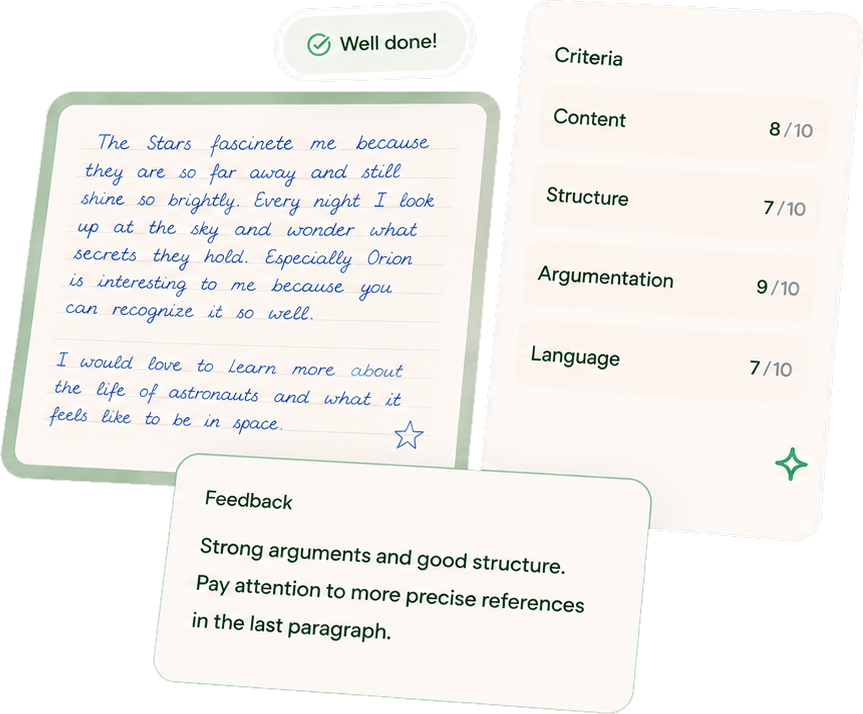
grAider creates an assessment draft based on your criteria.
Adapt scores, approve feedback, and share it with learners.
Automate routine tasks and gain more room for individual support.
Assess based on criteria and provide traceable feedback.
Your data stays in the EU, securely and GDPR-compliantly.
Become part of the grAider community and get started now.
FAQ
Respuestas breves para docentes en Chile que quieren entender cómo grAider encaja en la corrección de pruebas y trabajos escritos.
Sí. grAider ayuda a revisar respuestas manuscritas, preparar borradores de evaluación con IA y mantener cada puntaje y comentario editable antes de usarlo con estudiantes.
grAider puede apoyar Lenguaje, Matemática, Inglés, Historia, Biología, Química, Física y otras asignaturas cuando la evaluación usa una pauta o rúbrica clara.
Sí. El flujo está pensado para instituciones educativas chilenas que corrigen pruebas escritas, guías o evaluaciones con criterios definidos.
Sí. El docente puede trabajar con su propia pauta o rúbrica para que los borradores de puntaje y retroalimentación sigan los criterios de su curso, colegio o institución.
No. grAider entrega borradores revisables. La profesora o el profesor decide qué puntajes, comentarios y cambios se aprueban antes de devolver la evaluación.